
With the continuous advancement of display technologies, it is now possible to transform any glass surface in your home into a professional projection screen without installing bulky displays or making complex modifications. Smart film in home cinema systems, combined with rear projection screens, is one of the latest innovations that merges technology with modern design. When paired with a projector, smart film can turn ordinary glass into a high-quality display surface, delivering an immersive cinematic experience. This technology is an ideal solution for homeowners seeking premium entertainment while maintaining the elegance of their interior spaces.
Rear Projection Screens in Home Cinema Systems
Rear projection screens are among the most advanced technologies used in modern home cinema systems. The image is projected from behind the glass or screen, while viewers watch the content from the front. This setup helps improve image quality and reduces the impact of ambient lighting, resulting in a clearer and more professional viewing experience. Rear projection screens can also be integrated with smart film to create an elegant display surface that remains virtually invisible when not in use.
What Is Smart Film for Home Cinema?
Smart film is an advanced layer applied to glass surfaces to provide multiple functions, including transforming glass into a projection screen when used with modern display systems. When integrated into a home cinema setup with rear projection screens, smart film creates an ideal surface for displaying high-resolution images and videos. This makes it an innovative alternative to traditional projection screens while offering greater flexibility and a more sophisticated appearance.
Smart Film Projector: A Professional Viewing Experience at Home
A smart film projector setup allows windows and glass partitions to function as projection screens for movies, entertainment content, and presentations. This technology is capable of delivering sharp images and fine details when paired with high-resolution projectors, including 4K projectors. Smart film also enhances image quality when used with rear projection screens, providing a more immersive and enjoyable viewing experience.
Home Cinema Glass with a Modern Design
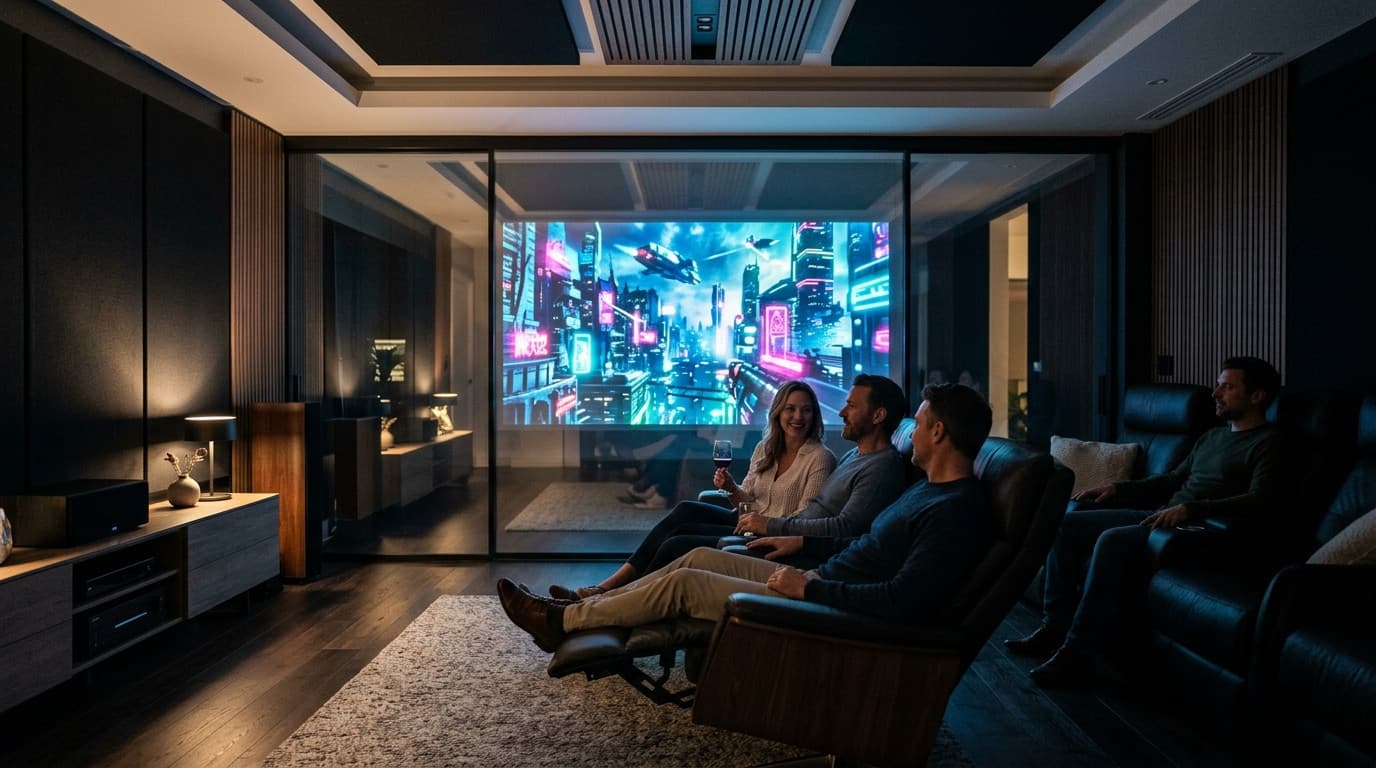
Home cinema glass combines functionality and aesthetics in a single solution. When the projection system is not in use, the glass maintains its elegant and natural appearance. Within seconds, it can transform into a large projection screen when the projector is activated. This approach helps save space and preserves interior design without the need for fixed display screens or additional structures that may affect the room’s décor.
How Do Rear Projection Screens Work?
Rear projection screens work by displaying images from the back side of the glass or projection surface while viewers watch from the front. When combined with smart film and modern projectors, the glass becomes a high-quality display surface capable of producing clear images and vibrant colors. Rear projection screens also improve image clarity and reduce reflections caused by surrounding light sources. These advantages make the technology capable of delivering a viewing experience that closely resembles a professional cinema environment.
Advantages of Rear Projection Screens Compared to Traditional Screens
Rear projection screens offer several advantages over conventional display screens. They save space by utilizing existing glass surfaces instead of requiring large mounted displays. They provide a sleek and modern appearance that complements contemporary interior designs. Additionally, rear projection screens can create much larger display areas than traditional screens, enhancing the overall viewing experience. Their compatibility with home cinema systems makes them an attractive choice for premium entertainment environments.
Best Applications of Smart Film and Rear Projection Screens
Smart film and rear projection screens are highly versatile technologies that can be used across various applications. In home cinema systems, they provide a large immersive display without affecting the room’s aesthetics. They are also popular in modern villas, adding a sophisticated technological touch to interior spaces. In corporate environments, they are ideal for meeting rooms and presentations due to their professional display quality. Furthermore, they are widely used in retail stores, exhibitions, luxury hotels, and upscale restaurants to create engaging and visually impressive experiences.
Benefits of Combining Smart Film with Rear Projection Screens
Integrating smart film with rear projection screens creates one of the most advanced display solutions available today. This combination provides brighter and clearer visuals, reduces reflections, and offers greater flexibility in interior design. It also allows large-format displays to be created without compromising the overall appearance of a room, making it an excellent option for luxury homes, entertainment spaces, and commercial environments.
How to Choose the Right Home Cinema System
When selecting a home cinema system that utilizes smart film and rear projection screens, several factors should be considered. These include the size of the glass surface, the type of projector being used, ambient lighting conditions, and the desired display resolution. Choosing high-quality products is essential to ensure outstanding performance and a premium viewing experience that lasts for years.
Conclusion
Smart film and rear projection screen technologies represent the future of modern home cinema systems by combining advanced performance with elegant design. By integrating a smart film projector setup with home cinema glass and rear projection screens, any glass surface can be transformed into a professional-quality display capable of delivering an exceptional viewing experience. As a result, rear projection screens have become a preferred choice for homeowners and businesses seeking innovative display solutions that blend technology, flexibility, and architectural beauty.
Frequently Asked Questions About Smart Film and Rear Projection Screens
What are rear projection screens?
Rear projection screens are display systems where images are projected from behind the glass or screen while viewers watch from the front. This technology improves image clarity and minimizes the effects of ambient lighting.
Can glass be transformed into a 4K projection screen?
Yes, smart film can be combined with modern projectors to turn glass surfaces into high-quality projection screens capable of displaying 4K content.
What is the difference between rear projection screens and traditional screens?
Rear projection screens allow glass surfaces to function as display screens without requiring fixed installations. They offer greater design flexibility, reduce reflections, and create a cleaner, more elegant appearance.
Is smart film suitable for all types of glass?
Smart film can be installed on most glass surfaces in homes, offices, and commercial spaces, provided that the appropriate type of film is selected and professionally installed.
What are the best uses for home cinema glass?
Home cinema glass is commonly used in home cinema systems, entertainment rooms, smart villas, meeting rooms, exhibitions, retail environments, hotels, and luxury restaurants.
Does ambient lighting affect rear projection screen quality?
Rear projection screens are designed to reduce the impact of ambient lighting compared to many other display solutions. However, selecting the right projector and maintaining balanced lighting conditions are still important for achieving the best image quality.
Why is smart film ideal for home cinema systems?
Smart film combines functionality and modern aesthetics by allowing glass to become a projection screen when needed while maintaining its elegant appearance when not in use. This makes it an excellent solution for contemporary home cinema designs.